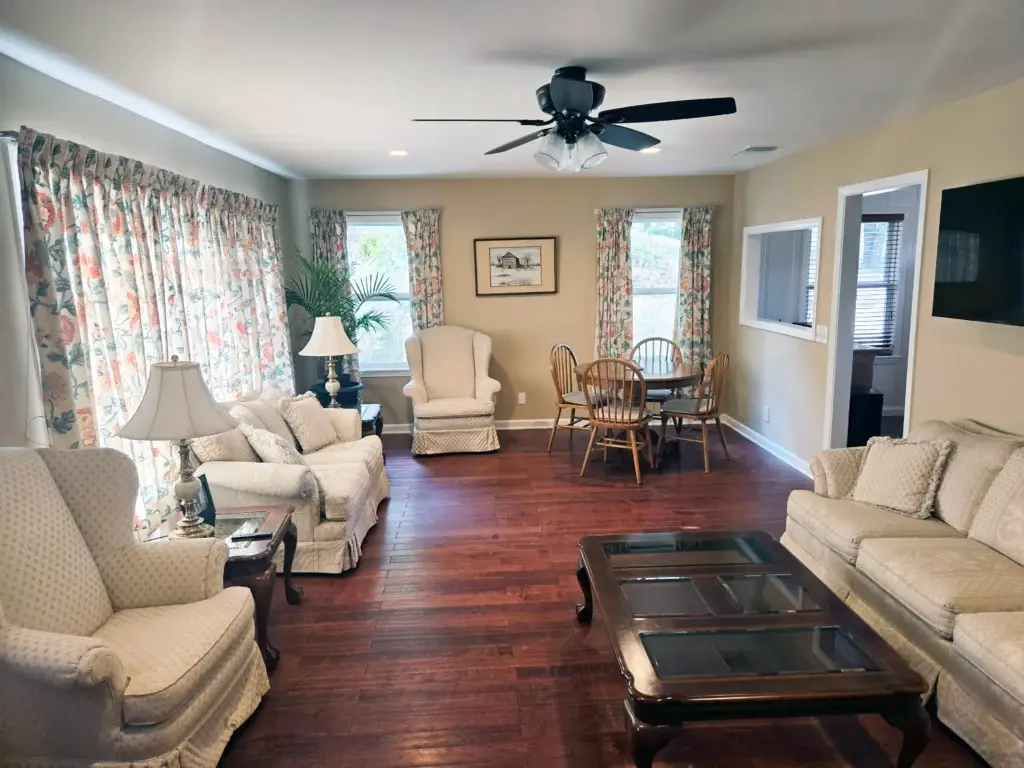
PRIVATE LIVING SPACE ON THE MANSION GROUNDS

THE RANCH HOUSE

The Stonehouse adds another layer of charm and versatility to the property,
offering a unique space for special guests, family,
or those looking for a more private and memorable experience.

A Relaxing Stay with Small-Inn Charm

Mountain View Inn offers a more intimate lodging experience for travelers looking for comfort, character, and a peaceful place to stay in Piru. With just 9 guest rooms, the inn provides a boutique atmosphere that feels welcoming, personal, and easy to enjoy.

Whether you are visiting for a wedding, weekend getaway, family gathering, or special event, Mountain View Inn is designed to give guests a restful stay in a setting that feels both charming and convenient.

With an on-site restaurant and nearby access to local destinations and celebrations, the inn makes it easy to settle in and enjoy the experience.

WELCOME HOME

Lodging Options for Different Types of Guests

Mountain View Inn works well for wedding guests, and family members gathering for special occasions.

A convenient option for out-of-town family and friends attending celebrations in the Piru area.


Guest Rooms

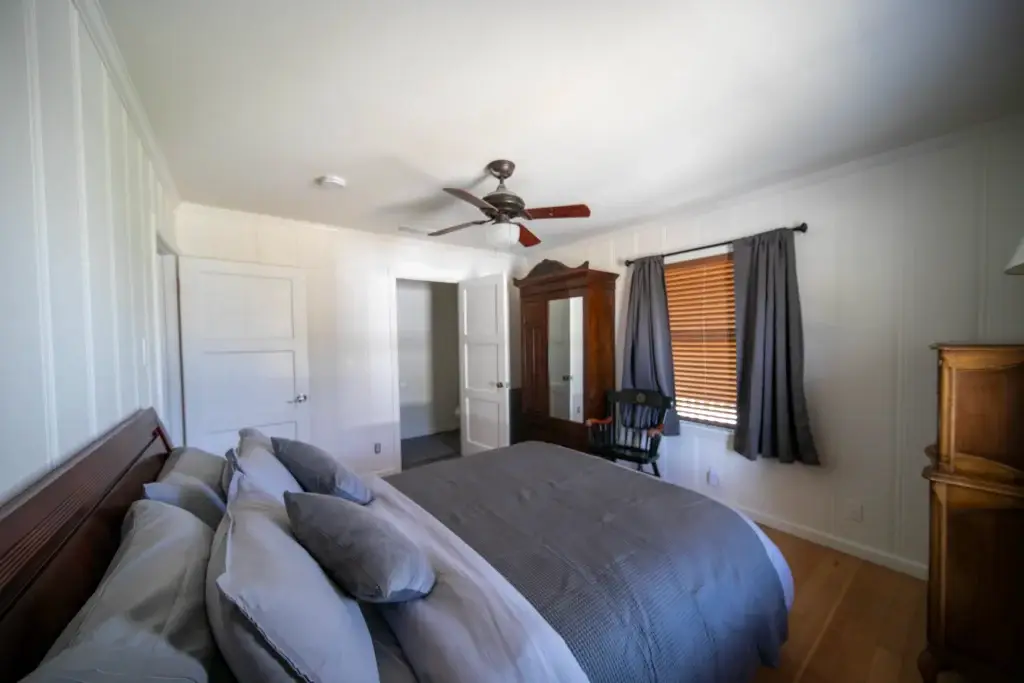
Enjoy an intimate inn experience with a limited number of rooms and a more personal feel.

ROOM 1

Romano

The name “Ramona” holds a special place in Piru’s history, inspired by the classic 1884 novel Ramona by Helen Hunt Jackson. The story, set in Southern California, highlights the region’s rich cultural heritage and romanticizes its landscape. Piru itself served as a filming location for several adaptations of the novel, adding a layer of historical and cinematic significance to the town. The name “Ramona” reflects the timeless beauty and charm of Piru, connecting its past with the present and honoring its role in storytelling and history.

ROOM 2

Fustero

Juan Fustero is one of Piru’s most renowned Indigenous figures, born in 1841 on the Temescal Ranch near the mouth of Piru Canyon. A member of the Piru Indian Tribe—originally known as the Pi’idhuku, named after the reed they used for basket weaving—Fustero’s people were known for their temescals, or sweat houses, which attracted coastal Indigenous communities seeking their reputed healing properties. In 1885, Juan Jose Fustero was granted a U.S. land patent for his homestead in Piru Canyon, a significant achievement that enabled him to apply for U.S. citizenship and secure his right to vote, marking an important moment in the history of Indigenous rights in the region.

ROOM 3

Lechler

Harry H. Lechler, born in 1912 in Piru, California, was a descendant of 1850s pioneer George Washington Lechler. In 1943, he began curating a private museum in his home, showcasing artifacts from the Santa Clara River Valley. His dedication culminated in the construction of a dedicated museum building on Main Street in 1969. For decades, Harry shared his extensive collection with the community, offering insights into the region’s rich history. In 2000, the museum’s contents were auctioned, dispersing its treasures. Harry’s passion for preserving local heritage left an indelible mark on all who visited his museum.

ROOM 4

Warring

Hugh Warring was a highly respected and prominent figure in the Piru community. His family owned and resided in the historic Piru Mansion longer than any other owners, leaving a lasting legacy in the area. In addition to their stewardship of the mansion, the Warring family also built the Warring Stonehouse on the property. Hugh and his father were accomplished beekeepers, maintaining 1,500 stands of bees and producing an impressive 116 tons of honey in 1884. Beyond beekeeping, he cultivated vast acres of oranges, lemons, and olives, contributing to the region’s agricultural prosperity. Hugh was also active in the oil industry, serving as secretary of the Fortuna Oil Company. His family discovered Warring Water and, with a spirit of generosity, established Warring Park in Piru, ensuring a lasting benefit for the community.

ROOM 5

Hunt

Helen Hunt Jackson is best known as the author of Ramona, a novel that, beneath its fictional love story, serves as a poignant historical depiction of the injustices faced by Indigenous people in Southern California. First published in the late 1800s, Ramona became immensely popular, with over 300 printings and five film adaptations. Since 1923, an outdoor play based on the novel has been performed annually in Hemet, California. The book had a significant influence on Southern California’s cultural identity, romanticizing the region’s Mexican colonial past and shaping its image. Its publication coincided with the expansion of railroad lines, drawing tourists eager to visit sites believed to be linked to the novel’s setting.

ROOM 6

Alejandro

Alessandro, a fictional character in Helen Hunt Jackson’s Ramona, is the noble and resilient son of Pablo Assís, chief of his tribe, and the leader of the Native American sheep shearers. Described as tall, wise, honest, and devoutly Catholic, Alessandro quickly falls in love with Ramona and chooses to stay at the Rancho. The novel follows their journey as they elope, have a daughter, and struggle to find a safe place to call home. In the wake of war and the expanding wave of European-American settlement, Alessandro’s tribe is forcibly removed from their land. Time and again, settlers drive them from their homes, taking not only their land but also their tools and means of survival. Their hardships intensify until Alessandro meets a tragic end when he is murdered. His story, though fictional, mirrors the harsh realities faced by Indigenous people in California during that era, making Ramona a powerful and poignant historical.

ROOM 7

Cook

David C. Cook, born in 1850, was a prominent publisher from Elgin, Illinois, renowned for his religious publications. In 1887, seeking to improve his health, he founded the town of Piru in California’s Santa Clara River Valley. Envisioning a “Second Garden of Eden,” Cook cultivated the area with biblically referenced fruits such as apricots, dates, figs, grapes, olives, and pomegranates. He constructed the Piru Mansion in 1890, a Queen Anne Style home that remains a significant landmark. Cook’s efforts in developing Piru and his contributions to its agricultural landscape have left a lasting legacy in the region.

ROOM 8

Pickford

Gladys Louise Smith (April 8, 1892 – May 29, 1979), known professionally as Mary Pickford, was a Canadian-American pioneer of the American film industry. With a Hollywood career spanning five decades, Pickford became one of the most beloved actresses of the silent film era. Throughout the 1910s and 1920s, she was considered the most famous woman in the world, with one journalist proclaiming her to be “the best-known woman who has ever lived.” In 1910, Pickford starred in Ramona, the first major motion picture filmed in Southern California. The 17-minute silent film was shot in Piru, where the cast stayed at the then Mountain View Hotel, marking a significant moment in both cinematic and local history.

ROOM 9

Felipe

Felipe Moreno is an important character in Helen Hunt Jackson’s novel Ramona, believed to be inspired by figures from Camulos Ranch. As the eldest son of Señora Moreno, Felipe took on the responsibilities of running his mother’s estate after his father’s passing. Initially, he shared a sibling-like bond with Ramona, but after the tragic murder of her husband, Alessandro, Felipe ultimately marries her. The couple relocates to Mexico City as the Franciscan influence fades and Hispanic landowners begin losing their properties to American settlers, marking the end of an era in California’s history.

DINING

Trellis Restaurant

Trellis Restaurant offers a warm and inviting dining experience in a setting that blends charm, comfort, and hospitality. Whether joining us for a relaxed meal, a special occasion, or time with family and friends, Trellis is designed to create a memorable experience with welcoming service and an atmosphere that feels both refined and approachable.

Scroll to Top